
.svg)

.svg)
.svg)
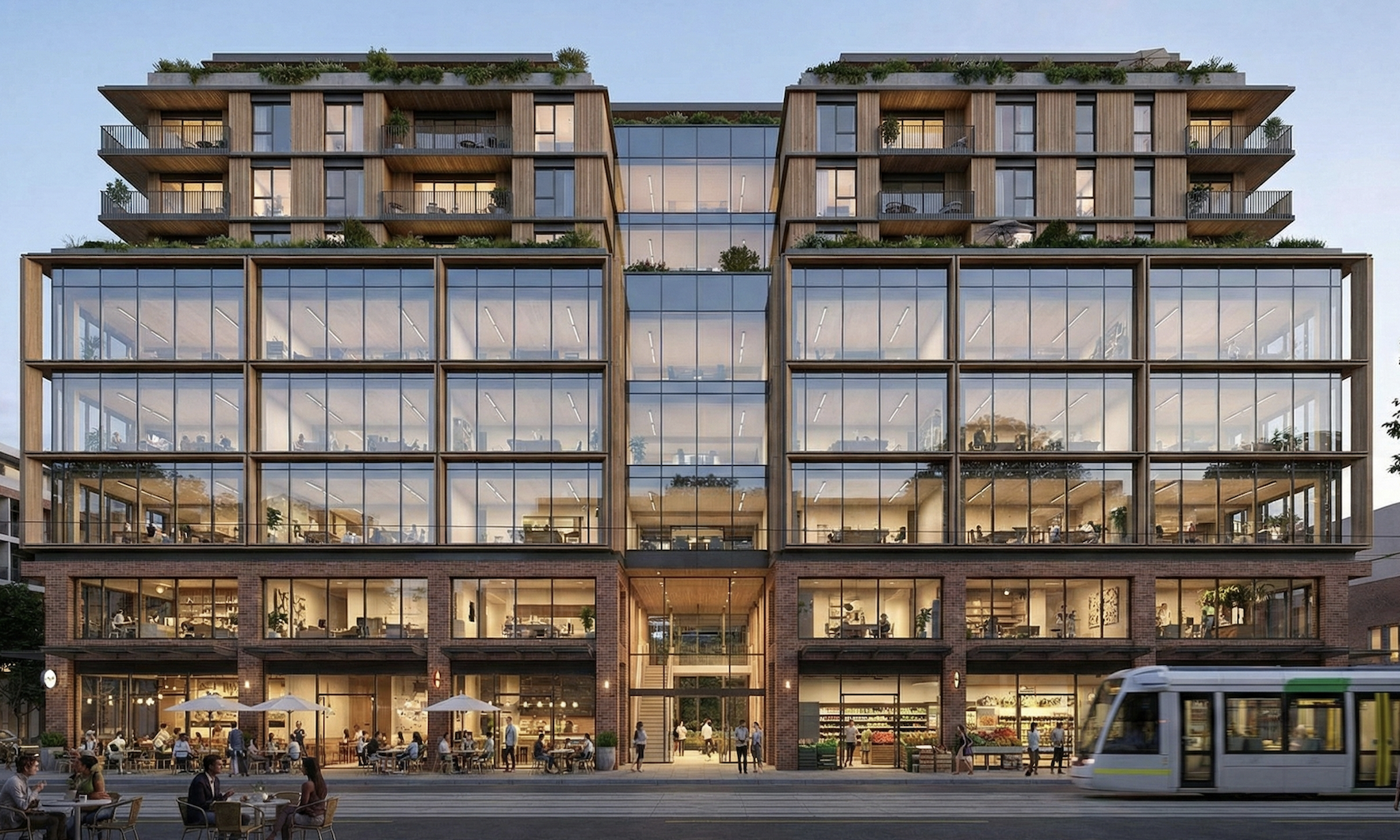
Mixed-use developments represent one of the most exciting, and challenging, frontiers in architectural design. Combining residential, commercial, retail, and hospitality spaces within a single building or precinct requires precise planning, technical integration, and creative collaboration between architects, builders, and mechanical engineers.
From a heating and cooling perspective, these projects push HVAC systems to their limits. Each use type has unique comfort, acoustic, and ventilation requirements, all of which must coexist efficiently within a shared structure. The success of a mixed-use project often depends on how well these competing demands are balanced.The Challenge of Mixed-Use Building Dynamics
Mixed-use buildings operate on overlapping schedules, with each function contributing different heat loads, air exchange requirements, and occupancy patterns. Retail spaces generate significant heat and require strong ventilation during business hours. Residential areas demand stable comfort and minimal noise. Offices rely on consistent air quality and controllable temperature zones.
Without strategic zoning and careful load diversity modelling, one system’s needs can easily undermine another’s. Overcooling, noise transfer, and wasted energy are common symptoms of poor coordination between architectural layout and mechanical design.
For architects and builders, the solution lies in early integration, embedding HVAC considerations into the concept stage, not as an afterthought.Engineering Fundamentals for Mixed-Use HVAC Design1. Zoning and Load Diversity
Creating independent HVAC zones for each function (residential, retail, hospitality, office) is essential. Each zone should have its own control and metering to ensure energy accountability and flexibility.
Mechanical engineers use load diversity modelling to predict how energy demand shifts throughout the day, preventing overdesign while guaranteeing comfort under peak conditions.2. Acoustic Isolation
Noise is one of the most overlooked challenges in mixed-use projects. Shared walls or ceilings between retail plant areas and residential dwellings can transfer mechanical noise and vibration. Strategies such as acoustic duct linings, vibration mounts, and equipment isolation prevent these issues and protect building compliance with NCC Section F and WELL Building acoustic criteria.3. Vertical Distribution Planning
Stacked occupancy types often mean vertical HVAC risers running between commercial podiums and residential towers. Ductwork, refrigerant piping, and ventilation shafts must be coordinated early to avoid ceiling height loss or structural interference. This requires tight collaboration between mechanical and structural engineers during design development.4. Control and Automation
Integrating a Building Management System (BMS) allows separate tenants or zones to operate independently while maintaining centralised oversight. This improves energy efficiency, reduces maintenance complexity, and allows for predictive performance analytics (critical in large, multi-use environments).System Strategies for Complex Buildings
Variable Refrigerant Flow (VRF):
VRF systems are ideal for mixed-use projects where space is limited and diverse loads exist. They enable simultaneous heating and cooling across different zones, balancing efficiency with occupant comfort.
Chilled-Water Systems:
For larger developments, centralised chilled-water systems provide scalability and long-term resilience. Combined with thermal storage or heat recovery units, they reduce peak loads and operational costs.
Heat Recovery Ventilation (HRV) / Energy Recovery Ventilation (ERV):
These systems transfer thermal energy between incoming and outgoing air streams, improving efficiency while maintaining indoor air quality across residential and commercial zones.
Acoustic and Aesthetic Integration:
Optima frequently collaborates with architects to integrate plant screening, concealed duct routes, and silent, running fan coil units into interior and façade design, achieving both acoustic control and architectural cohesion.Design Collaboration: The Key to Project Success
Mixed-use developments require interdisciplinary coordination that begins before tender documentation. When architects, builders, and mechanical engineers align early, conflicts between aesthetics, structure, and services can be resolved on paper, not on site.
At Optima, our mechanical engineers model energy performance, simulate airflow, and propose system configurations tailored to each zone’s occupancy type. Our team ensures that every HVAC element, from condenser layout to air distribution, supports both the technical performance and architectural vision of the project.The Optima Approach
Optima’s mechanical design team has delivered HVAC systems for some of Australia’s most complex mixed-use developments. Our focus is on efficiency, flexibility, and integration, designing systems that enhance comfort and minimise lifecycle costs.
Our process includes:
- Comprehensive thermal and acoustic modelling.
- Tailored zoning and control strategies.
- Integration with BMS and passive design elements.
- Compliance with NCC Section J and Green Star benchmarks.
By uniting engineering intelligence with architectural sensitivity, Optima helps shape developments that perform as impressively as they look.Partner with Optima for Mixed-Use HVAC Design
Creating a building that serves multiple purposes requires a mechanical system that can adapt, balance, and perform. Whether your next project involves residential towers above retail or a complex mixed-use precinct, Optima provides the expertise to align mechanical systems with your design and sustainability goals.
Contact Optima’s technical team to discuss tailored HVAC strategies for your next project.