
.svg)

.svg)
.svg)
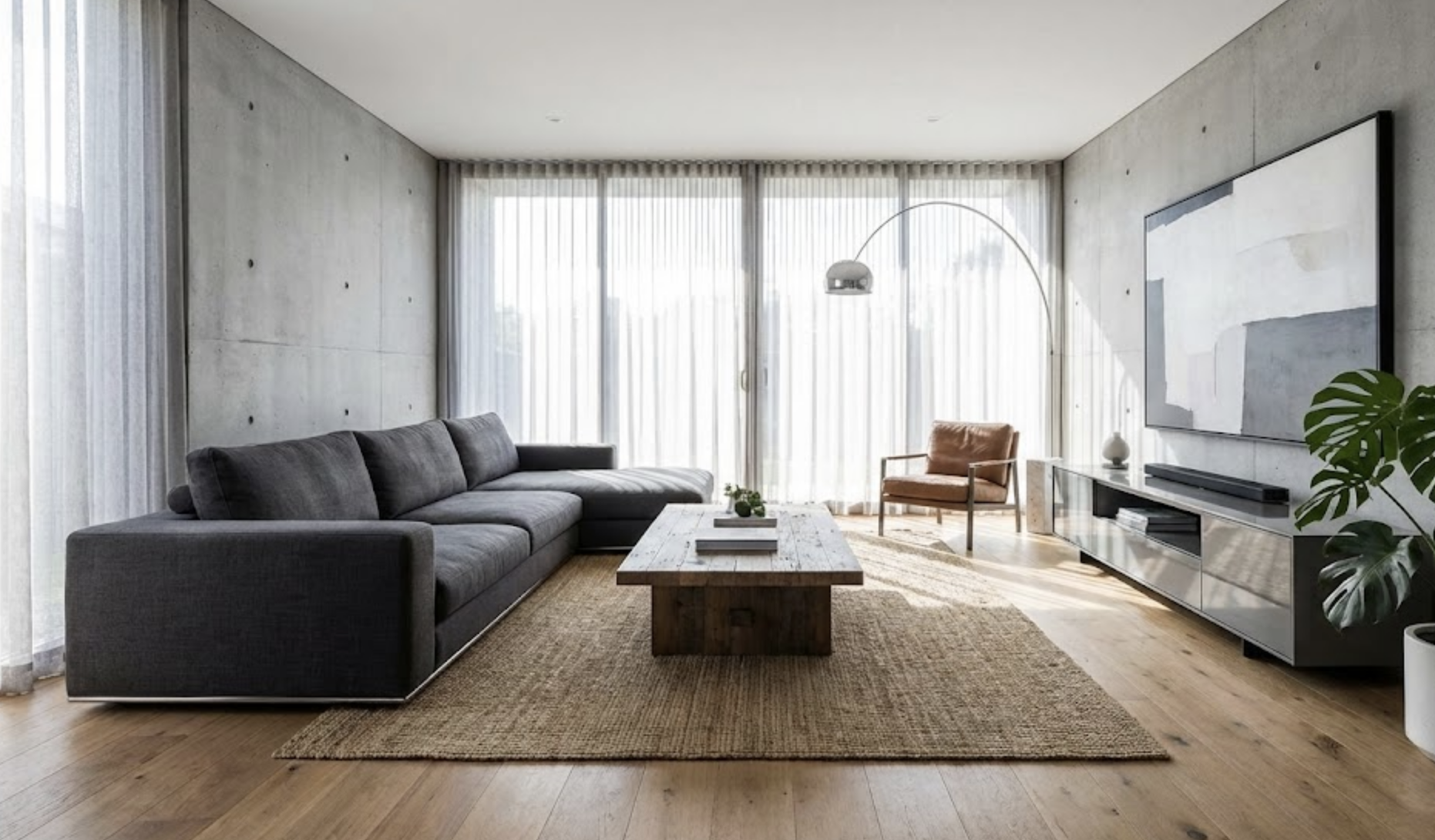
In contemporary architecture, visual purity is often as important as functional performance. Designers and builders are constantly striving to create spaces where form, structure, and technology work in harmony — where systems operate effortlessly in the background without drawing attention to themselves.
Nowhere is this more relevant than in the integration of HVAC systems.
In both high-end residential and commercial developments, heating, cooling, and ventilation systems must provide exceptional comfort while remaining virtually invisible. The challenge lies in achieving this balance — ensuring performance without aesthetic compromise.
Optima has mastered this delicate equilibrium, working alongside architects and builders to deliver concealed HVAC solutions that complement architectural design, support energy performance, and enhance occupant comfort.
The Aesthetic and Technical Balance
Architectural spaces are becoming increasingly sophisticated, with clean lines, minimalist detailing, and seamless transitions between materials and forms. However, these same spaces demand advanced environmental control.
HVAC systems — with their ducting, diffusers, and plant infrastructure — are essential for comfort and compliance, but their visual presence can disrupt architectural intent if not carefully managed.
The solution begins with early integration.
When mechanical engineers collaborate with architects from the initial concept stage, system pathways, ceiling heights, and access zones can be planned in harmony with the building’s design. This ensures mechanical performance and architectural vision progress together — not in conflict.
Design Strategies for Seamless Integration
Concealed HVAC design depends on thoughtful planning, intelligent product selection, and coordination across disciplines. Optima’s engineers employ multiple integration strategies to maintain performance while preserving visual elegance.
1. Slimline Ducted Systems
Modern low-profile ducted units are designed for projects where ceiling space is at a premium — such as apartments, hospitality suites, or premium offices.
These systems fit within shallow ceiling voids or bulkheads, providing even air distribution while maintaining uninterrupted ceiling lines.
2. Architectural Diffusers and Grilles
Linear slot diffusers and minimalist return grilles allow for unobtrusive airflow delivery. When aligned with lighting or ceiling grids, they effectively vanish into the design while maintaining balanced air movement and noise control.
3. Bulkhead Integration
Bulkheads can become architectural features rather than compromises.
When coordinated early, they frame joinery, lighting, or circulation zones while concealing duct runs and diffusers — turning mechanical necessity into design opportunity.
4. Underfloor Air Distribution (UFAD)
UFAD systems deliver conditioned air through a raised floor plenum, reducing the need for ceiling-based ductwork.
This approach is ideal for commercial environments where flexibility, reconfiguration, and aesthetic continuity are priorities.
5. Smart Zoning and Centralised Plant Design
Centralising plant equipment and implementing smart control systems allows for flexible zoning while keeping visual clutter out of occupied spaces.
These systems enhance energy efficiency, simplify maintenance, and preserve architectural clarity.
Preserving Acoustics and Accessibility
A common misconception is that concealed systems compromise performance.
In fact, with proper design, they often improve acoustics and spatial comfort.
By isolating mechanical equipment, using acoustic duct lining, and selecting low-noise components, systems can deliver silent, efficient operation that complements the design’s acoustic goals.
Maintenance access is also key. Concealment should never mean inaccessibility — Optima designs with future servicing in mind, ensuring that systems remain practical, compliant, and efficient throughout their lifespan.
Early Collaboration Is Essential
Successful integration depends on collaboration between disciplines.
Architects, builders, and mechanical engineers must work together from the schematic phase to coordinate ductwork, ceiling zones, and plant space allocations.
This collaboration enables:
- Precise duct routing that avoids structural conflicts
- Efficient ceiling coordination with lighting and acoustic panels
- Aesthetic alignment between diffusers, joins, and architectural lines
- Energy optimisation through early load analysis and airflow modelling
Through this partnership, HVAC becomes an invisible but vital architectural component — delivering comfort without visual compromise.
Technology, Modelling, and Performance Verification
Optima employs Computational Fluid Dynamics (CFD) modelling and advanced design simulation tools to predict airflow, temperature distribution, and acoustic outcomes before systems are installed.
This ensures that air delivery remains balanced even when components are concealed — validating performance while maintaining architectural integrity.
In addition, energy modelling allows for optimised system sizing and zoning, ensuring that concealed systems meet both performance standards and sustainability benchmarks.
Aesthetic Integration as a Design Principle
When mechanical systems are treated as part of the architectural design language, the result is both functional and beautiful.
The absence of visible mechanical clutter enhances perception of space, reinforcing the project’s design identity.
From luxury residences and boutique hotels to commercial offices and galleries, concealed HVAC design allows architecture to breathe — quietly, efficiently, and elegantly.
Engineering the Invisible
Concealing HVAC isn’t just a visual decision — it’s a technical achievement.
It represents the intersection of design intelligence, mechanical precision, and craftsmanship.
Optima’s engineers bring decades of experience in designing, installing, and commissioning architecturally integrated HVAC systems across Melbourne’s premium residential and commercial sectors.
Their approach ensures that every project delivers comfort, performance, and aesthetic cohesion.
Talk to Optima’s Design Engineers
For architects and builders seeking to integrate HVAC seamlessly into their next development, early collaboration is key.
Contact Optima’s technical team to explore design strategies, product recommendations, and modelling support that will help your project breathe beautifully — with climate control you’ll never see, but always feel.