
.svg)

.svg)
.svg)
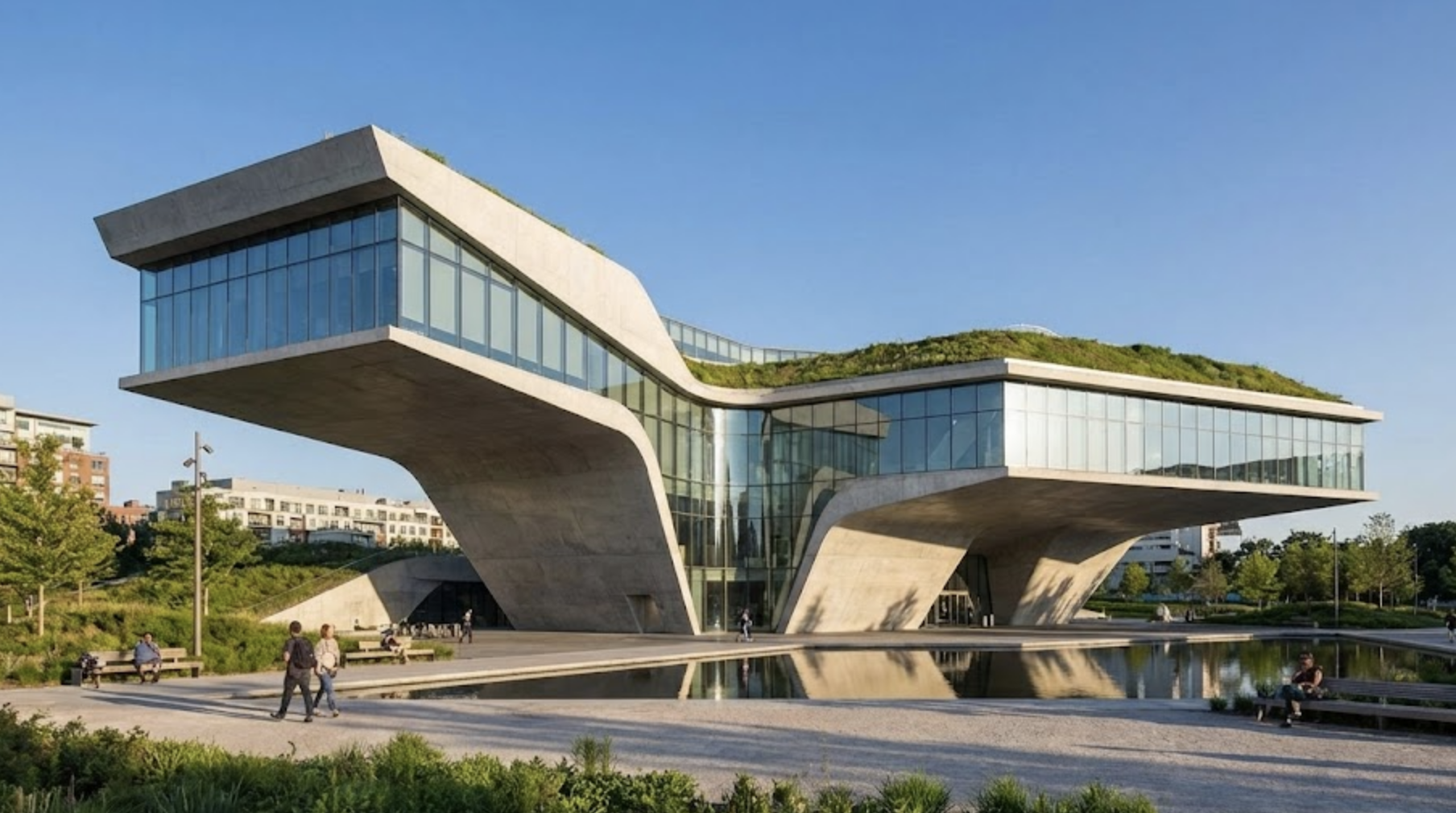
Air is invisible, yet it shapes every architectural experience. From how a space feels and functions to how it supports health and comfort, the distribution of air is one of the most critical and often underestimated elements in building design.
In both residential and commercial projects, air distribution directly impacts thermal comfort, indoor air quality, energy efficiency, and acoustic performance. For architects and builders, understanding how HVAC systems interact with spatial planning, materials, and occupant behaviour is key to achieving buildings that perform as beautifully as they look.
Rethinking Air as an Architectural Element
The evolution of HVAC design has transformed air distribution from a technical consideration into an architectural dialogue. In contemporary projects, ventilation and temperature control must be planned in tandem with lighting, structure, and finishes — ensuring that systems complement the design intent rather than disrupt it.
Architects are increasingly using concealed ductwork, linear slot diffusers, and integrated bulkheads to maintain visual harmony. The result: buildings that not only deliver superior comfort but also uphold architectural integrity.
The Science Behind Effective Air Distribution
At its core, air distribution is about achieving equilibrium — ensuring every zone within a space receives conditioned air at the right temperature, velocity, and volume. When executed correctly, occupants experience consistent comfort without drafts, noise, or uneven temperatures.
Key technical factors include:
1. Airflow Modelling and Analysis
Modern projects rely on Computational Fluid Dynamics (CFD) simulations to predict airflow patterns, temperature gradients, and pressure zones. This modelling allows engineers and architects to visualise how air will move through a space before construction begins — enabling design refinements that improve performance.
2. Zoning and Thermal Control
Dividing large or multi-purpose spaces into thermal zones ensures each area operates independently, optimising comfort and energy use. For example, a high-ceiling atrium and an enclosed meeting room will have vastly different thermal loads; precise zoning accounts for this.
3. Diffuser and Grille Placement
Diffuser type and placement dictate how air enters and circulates through a space.
- Linear slot diffusers provide sleek, uniform airflow ideal for modern interiors.
- Perforated diffusers evenly distribute air in open-plan areas.
- Displacement ventilation systems introduce air at low velocity from the floor, allowing natural buoyancy to carry it upward — perfect for large commercial settings.
4. Pressure Balance and Return Air
Every supply needs a corresponding return. Balanced air pressure prevents drafts, door slamming, and unwanted infiltration, maintaining stable indoor environments even in high-traffic or open-plan designs.
Integrating Air Distribution with Architectural Design
For architects and builders, coordination during early design stages is crucial.
Effective integration involves:
- Ceiling space planning: Ensuring adequate room for ductwork, lighting, and acoustic treatment.
- Material considerations: Reflective surfaces like polished concrete can affect airflow and acoustic behaviour.
- Design alignment: Diffusers and returns should align with lighting grids or structural lines for visual consistency.
When air distribution is incorporated early, projects achieve a seamless balance between mechanical performance and aesthetic intent.
Common Challenges and Design Solutions
Even the best HVAC system can underperform if airflow principles are overlooked. Common issues include uneven temperature distribution, noise, or restricted ceiling space.
Solutions include:
- Low-velocity duct design to minimise noise and turbulence.
- Smart diffusers that adjust flow rates based on occupancy.
- Underfloor Air Distribution (UFAD) in commercial projects to enhance flexibility and air quality.
- Hybrid systems combining natural ventilation with mechanical control to reduce energy consumption.
These approaches enable architects and engineers to maintain comfort while achieving sustainability goals and Green Star accreditation standards.
Optima’s Expertise in Air Distribution
Optima designs and installs HVAC systems where airflow performance and architectural design work in harmony.
Our engineers use advanced modelling tools and years of practical experience to deliver systems that are:
- Precision-balanced for consistent comfort
- Aesthetically integrated for design cohesion
- Energy-efficient to meet Australian performance standards
We collaborate closely with architects and builders from concept to commissioning, ensuring ductwork routes, diffuser placements, and zoning strategies align perfectly with the project’s structural and visual goals.
Achieving Comfort by Design
Air distribution is both a science and an art — one that blends technical precision with architectural sensitivity. The best systems are those that go unnoticed: silent, invisible, and perfectly balanced.
For architects and builders, partnering with an experienced HVAC specialist ensures that every aspect of air movement, from flow velocity to diffuser geometry, supports the desired design and comfort outcome.
Contact Optima to explore tailored air distribution solutions that combine engineering expertise with architectural finesse.